Autumn Welcome Lecture: IP Depertment
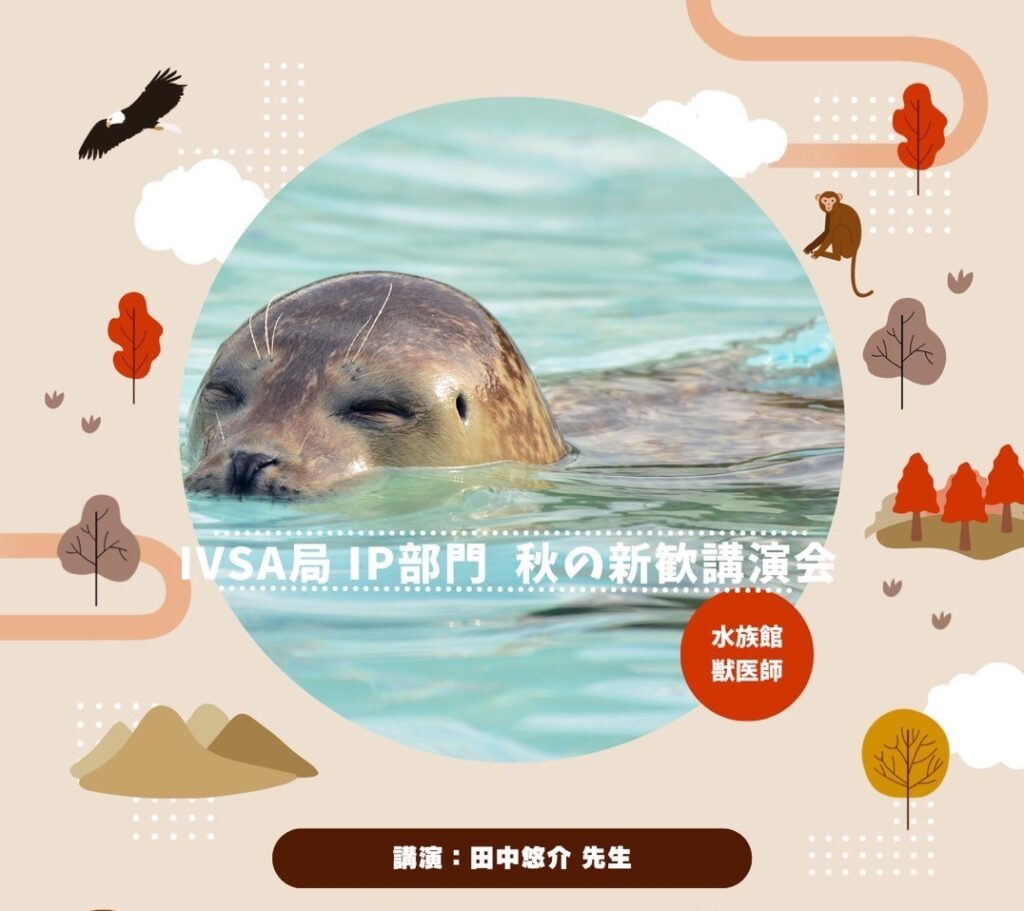
Speaker: Dr. Yusuke Tanaka
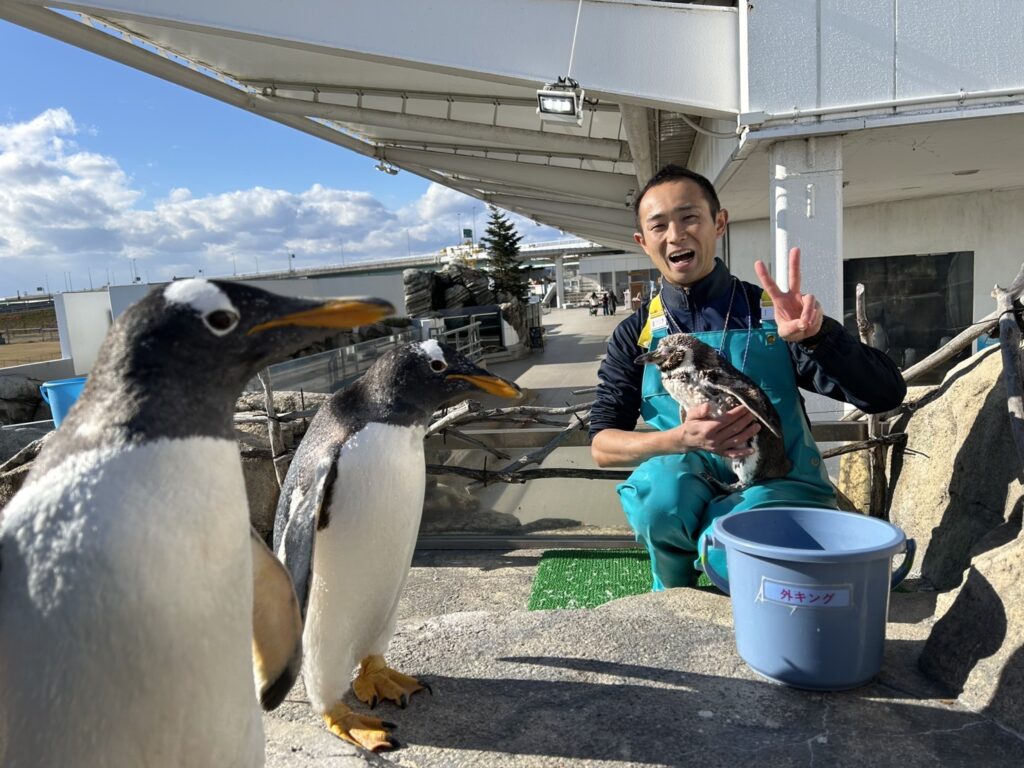
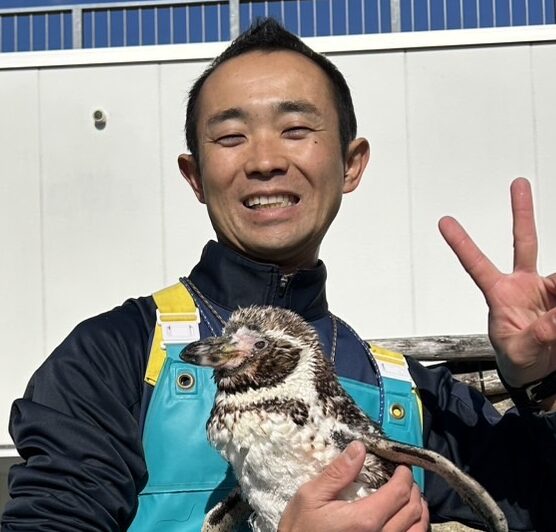
Dr. Yusuke Tanaka
He is an Aquarium Veterinarian at Sendai-Uminomori-Aquarium.
After graduating from Kasukabe High School in Saitama, he entered Nippon Veterinary and Life Science University, where he specialized in the Laboratory of Fish Diseases. During his university years, he served as the 3rd President of JAVS (Japan Association of Veterinary Students). His dream back then was a fun one: to take a commemorative photo in front of the main gates of every veterinary university in Japan!
His career as a vet began in 2010 at Marinepia Matsushima Aquarium. In 2015, he joined the Sendai-Uminomori Aquarium as a dedicated veterinarian. Now in his 16th year in the field, his work is incredibly diverse, ranging from health management and supporting the animal care team to general affairs.
Actually, he originally planned to become a small animal vet because of his beloved dog, Andy. However, a turning point came when a professor invited him to an internship at an aquarium. He realized that working as an aquarium vet connected his childhood memories of enjoying the aquarium with his other dream of becoming a teacher. This discovery solidified his career path.
Guided by his life’s mission to “be a bridge between people, and between people and animals,” he continues to work passionately every day for the well-being of both humans and animals at the aquarium.
Timeline
19:00~ Opening Remarks
19:00~20:30 Special Lecture by Dr. Tanaka
20:30~21:00 Q&A Session
21:00~21:30 Introduction of IVSA-J
21:30 Closing
Working at an Aquarium & Discovering Your Lifework
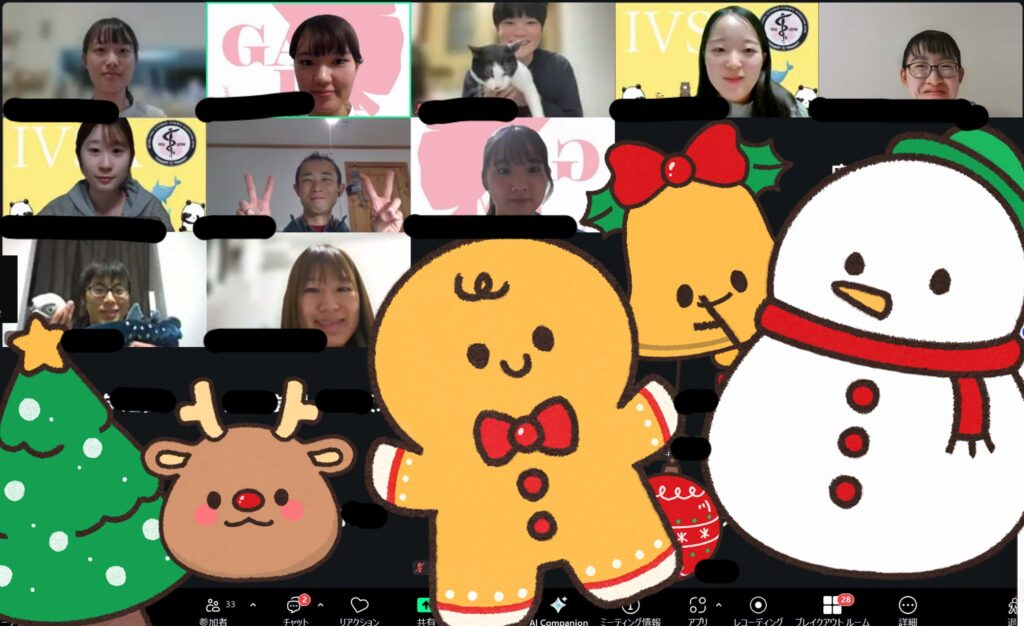
Dr. Tanaka gave a talk titled “Working at an Aquarium & Discovering Your Lifework” which included answers to questions we received in advance. This was followed by a Q&A session and an engaging dialogue with our coordinator (a member of the IP Department).
Below is a summary of the key insights from his talk.
Can you explain what a “lifework” actually is?
A lifework refers to every action you take to fulfill your life’s mission or purpose—one that aligns with your core values and beliefs. It’s often compared to a “ricework”, which is the work you do primarily to earn a living. For me, my personal goal—to be a bridge between people, and between people and animals—deeply resonates with the mission of the aquarium. This is why I believe this job makes my life so much richer.
The Four Roles of Zoos and Aquariums
The Japan Association of Zoos and Aquariums (JAZA) defines the following four roles for zoos and aquariums. Today, these are considered universal concepts for facilities nationwide—regardless of JAZA membership—and can be seen as the very core of their social significance.
1. Research
The Japan Association of Zoos and Aquariums (JAZA) defines the following four roles for zoos and aquariums. Today, these are considered universal concepts for facilities nationwide—regardless of JAZA membership—and can be seen as the very core of their social significance.
Dr.Tanaka categorized aquarium research into three types: research for society, research for the aquarium, and research with no immediate apparent purpose.
・ Research for Society: This includes studies like Pacific saury aquaculture, which contribute directly to the broader world and food industry.
・ Research for the Aquarium: Examples include dolphin artificial insemination and developing environmental enrichment devices to improve the well-being of the animals in our care.
・ Research with No Immediate Apparent Purpose: A fun example is a study measuring the maximum flight distance of Humboldt penguin droppings!
Dr. Tanaka believes this final category is particularly unique to aquariums and should be pursued proactively. Such quirky studies can be a great way to spark people’s curiosity and get them interested in living creatures. Additionally, aquariums also conduct collaborative research in partnership with various academic and research institutions.
2. Species Conservation
Species Conservation consists of two types: In-situ (in the wild) and Ex-situ (within facilities). Local aquariums, in particular, often serve as vital hubs for conserving native species unique to their regions. For example, Sendai-Uminomori-Aquarium proactively engages in the breeding and conservation of the Acheilognathus typus (Zeni-tanago).
Furthermore, we develop breeding techniques to sustain our exhibition populations and collaborate with other institutions to maintain generations through captive breeding. By gaining insights into ecology, medical treatment, and breeding through daily care, we can potentially contribute to in-situ conservation efforts.
3. Recreation
Recreation accounts for the majority of reasons why the general public visits aquariums. It is no exaggeration say that this is the role society seeks most from these facilities. Moreover, recreation serves as a gateway to draw people in, providing the initial spark to deepen their learning and understanding of marine life.
4. Education
One of the primary roles of zoos and aquariums is to help visitors learn about animals and their environments. Unlike schools, which provide continuous and systematic education, our time with visitors is limited, and the impact we can make in a single visit is small. Ultimately, whether or not people choose to apply what they have learned to their lives is left to their own discretion.
I believe that providing the “initial spark” for interest and curiosity is the most vital educational role of an aquarium. I work every day with the hope that visitors will feel inspired to participate in or support our activities. At the same time, we must cater to those who already have a deep interest in marine life. To meet their high expectations, I feel it is essential to constantly study and update my own knowledge.
For example, the results of our study directly contribute to species conservation. This, in turn, enhances the recreational experience for our visitors, leading to more opportunities for education. By feeding back the insights gained through these processes, we can further advance our research. I believe that these four roles are not separate but exist in a continuous, synergistic cycle.
The Work Behind the Four Roles
The daily operations form the essential foundation that supports the four roles. To be specific, his work includes day-to-day husbandry, health management, preventive medicine, treatments, and biosecurity. Furthermore, he is involved in breeding programs, animal welfare, and improving Quality of Life(QOL). The list of responsibilities is endless.
Husbandry
Dr. Tanaka shared specific clinical cases, providing deep insights into specialized veterinary medicine. For example, he discussed the usefulness of fibrinogen as an inflammatory marker in penguins and shared diagnostic imaging from CT scans and endoscopies. Through these examples, I realized the importance of not only dedicating oneself to each individual patient but also ensuring that the lessons learned are applied to future cases.
Daily health management
As a veterinarian, the most challenging part of my job is daily health management. Above all, it is crucial to observe the animals with your own eyes.
Furthermore, through daily “husbandry training,” we are able to collect a vast amount of clinical data—ranging from teeth brushing to urine and blood sampling—without causing stress to the animals. This daily management is the most demanding and time-consuming part of my role, yet it is undeniably the most important foundation of everything we do.
Distinguishing between “Means” and “Purpose”: Goals are just one of the means! My Life’s Work at the Aquarium
“Ask yourself: What is most important to you—the means or the purpose?
Using mountain climbing as an analogy, the “Purpose” is to reach the summit, while the “Goals” are the waypoints along the way. Your purpose represents your ideal self—something so profound that it may never be fully “completed,” which is exactly why you continue to pursue it for a lifetime. In contrast, a goal is merely one of the means to fulfill that purpose. You can have multiple goals, and there is no need to fixate on just one.
The “Four Roles” of an aquarium represent the Purpose, while “Daily Operations” are the Means. I find the means rewarding and enjoyable in themselves. However, I believe we must never lose sight of the purpose.
My purpose is to “be a bridge between people, and between people and animals.” Towards this end, I have many goals: reforming work styles in the aquarium, finding a lifelong research theme, and becoming the best penguin veterinarian in Japan. These are my “Dreams.”
While the purpose remains the most important, I believe that those who can truly enjoy the Means to get there are the ones who can enrich not only their working hours but their lives as a whole.
Conclusion
There are countless means to reach your purpose. That is why it is important not to fixate on a single path, but to approach each step with your own unique dedication. I believe this attitude is what leads you to discover your true life’s work.
In fact, my purpose—to be a “bridge between people, and between people and animals”—was not something I had from the beginning. Its meaning gradually revealed itself through my various activities over time. It doesn’t matter whether the Means or the Purpose comes first. My hope is simply that you find your own life’s work through your own journey.
Sendai-Uminomori-Aquarium
This is the aquarium at Sendai in Miyagi.
The word “Umi” in its name refers not only to the “Sea” (Umi) but also to “Produce” or “Create” (Umidasu).
The aquarium features a stunning entrance and unique exhibits like the Miyagi Sea Squirt (Hoya), which shows the actual state of local aquaculture. They also highly recommend the Bottlenose Dolphin performances. As they celebrate their 10th anniversary, they are planning a variety of exciting events!
Closing Thoughts
Through this talk, it is clear that Dr. Tanaka is a person with a strong, unwavering sense of self. His unique, individualistic stories were incredibly engaging, and his confident, forward-looking way of life is both straightforward and sophisticated. I felt a strong desire to search for my own purpose in life, just as he has.
I would be truly happy if even a small part of his wonderful philosophy reaches veterinary students through this article. Thank you very much for reading until the end.
Originally posted 2026-01-01 18:07:45.